ナノポア -Nanopore

The surface of a cell is covered with numerous tiny pores, each with a diameter of only a few nanometers (nm) or less. These pores, known as bionanopores, are composed of proteins and play essential roles in transporting ions, DNA, drugs, and other substances across the cell membrane. Their remarkable functionality holds great potential for applications in sensors and related technologies.

>CHALLENGE

Challenges Beyond the Limits of Semiconductors and Toward Molecular Devices

Semiconductor devices are indispensable components of virtually all electronic devices we use in our daily lives. To date, semiconductor technology has followed Moore’s law, achieving continual miniaturization and performance enhancement. However, the limits of further miniaturization are now becoming increasingly apparent.

>BARRIER

The Barrier of Semiconductor Miniaturization

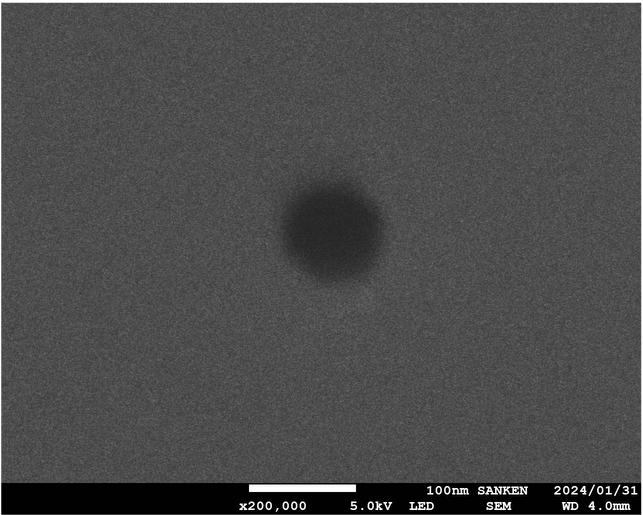
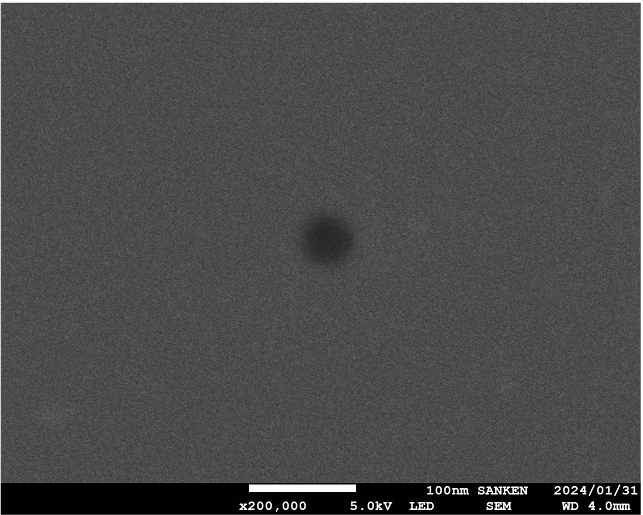
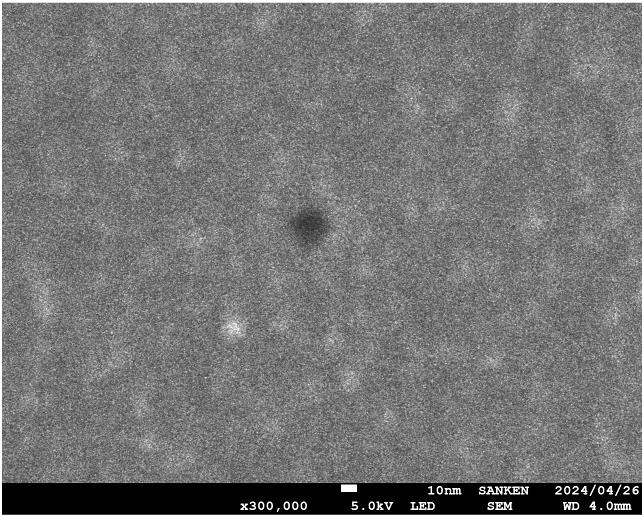
Since 2006, we have been advancing the research and development of solid-state nanopores by leveraging advanced nanofabrication technologies. In particular, by integrating electron-beam lithography, beam correction techniques, and etching processes, we have succeeded in reducing both the thickness and diameter of nanopores to their practical limits.
Currently, in collaboration with industry partners, we are working to develop technologies that enable the stable fabrication of solid-state nanopores with diameters below 50 nm and thicknesses below 50 nm, achieving high precision, excellent reproducibility, and high fabrication yield.

Φ100nm
Φ50nm
Φ20nm